
Architecture rarely changes overnight. More often, it shifts through a single building that makes everyone stop and ask: why haven’t we always done it this way? Across American history, a handful of private homes have done exactly that, not through grand civic gestures but through the quiet radicalism of a bedroom, a terrace, a wall of glass, or the deliberate absence of one.
The eight homes gathered here span centuries and styles, from a Virginia hilltop to a Pennsylvania waterfall, from a glass box in Connecticut to a concrete experiment in Los Angeles. What they share is the ability to push the entire conversation about American domestic design forward, sometimes by decades.
Monticello, Virginia (1809): Jefferson’s Living Laboratory
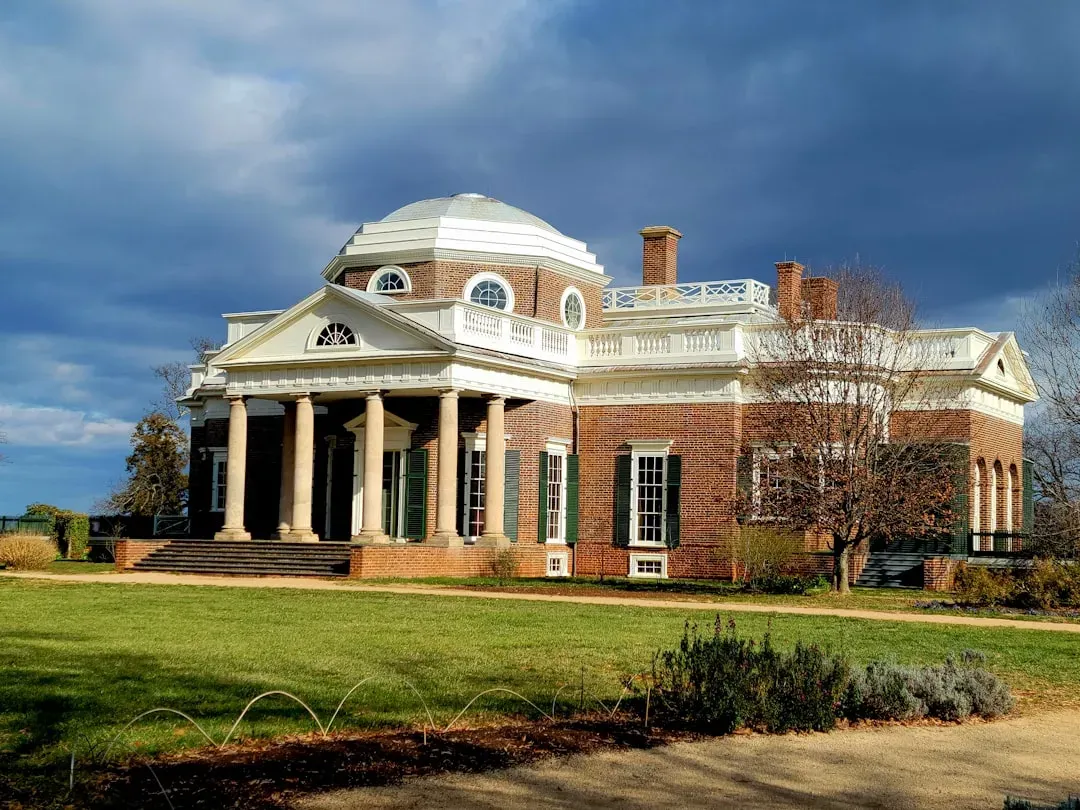
Thomas Jefferson called Monticello his “essay in architecture.” Inspired by the work of Italian architect Andrea Palladio, Jefferson broke with convention by setting his plantation home on a hilltop instead of along a river. That single decision carried enormous symbolic weight, separating the American idea of a great house from its European riverbank precedents and placing it instead in deliberate dialogue with the sky and surrounding landscape.
Jefferson designed the main house using neoclassical design principles pioneered by Italian Renaissance architect Andrea Palladio, reworking the design through much of his presidency to include design elements popular in late 18th-century Europe and integrating numerous ideas of his own. These principles came to define the architecture of the early United States, first in Richmond with Jefferson’s design of the State Capitol, and then in Washington D.C., where he influenced decisions on the design of the U.S. Capitol and the White House. Monticello was never just a home. It was a proof of concept for a new national aesthetic.
Lyndhurst, Tarrytown, New York (1842): Gothic Romance on the Hudson
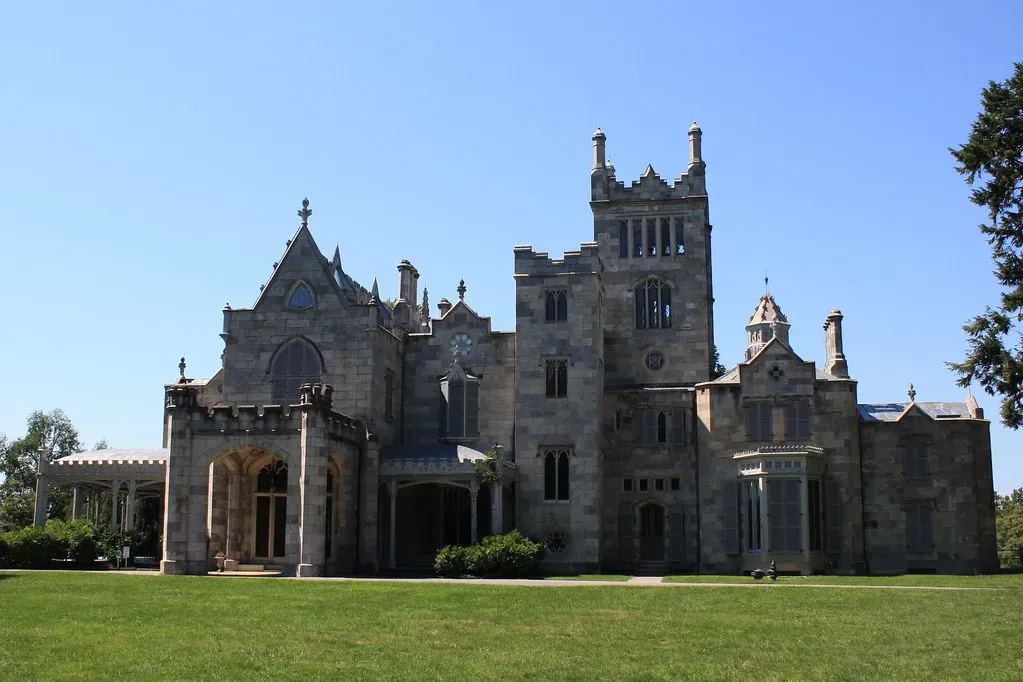
Shocking when it was built, Lyndhurst is a gothic castle on the Hudson River, built by former New York City mayor William Paulding as a retreat from the industrialized city. The work of architect A. J. Davis, Lyndhurst’s irregular style complemented its rugged, picturesque setting and proved highly influential as other wealthy Americans strove to create grand houses that expressed their individuality and connected them with the land.
The Gothic Revival brought in the picturesque detail of medieval architecture, featuring irregularly shaped homes that often blended into their wild outdoor environments. Lyndhurst made that idea tangible for American clients in a way pattern books never quite could. It planted the seed of the idea that a home could be a dramatic personal statement rather than simply a shelter, a notion that would echo through American residential design well into the 20th century.
Fallingwater, Mill Run, Pennsylvania (1937): Architecture Meets Nature
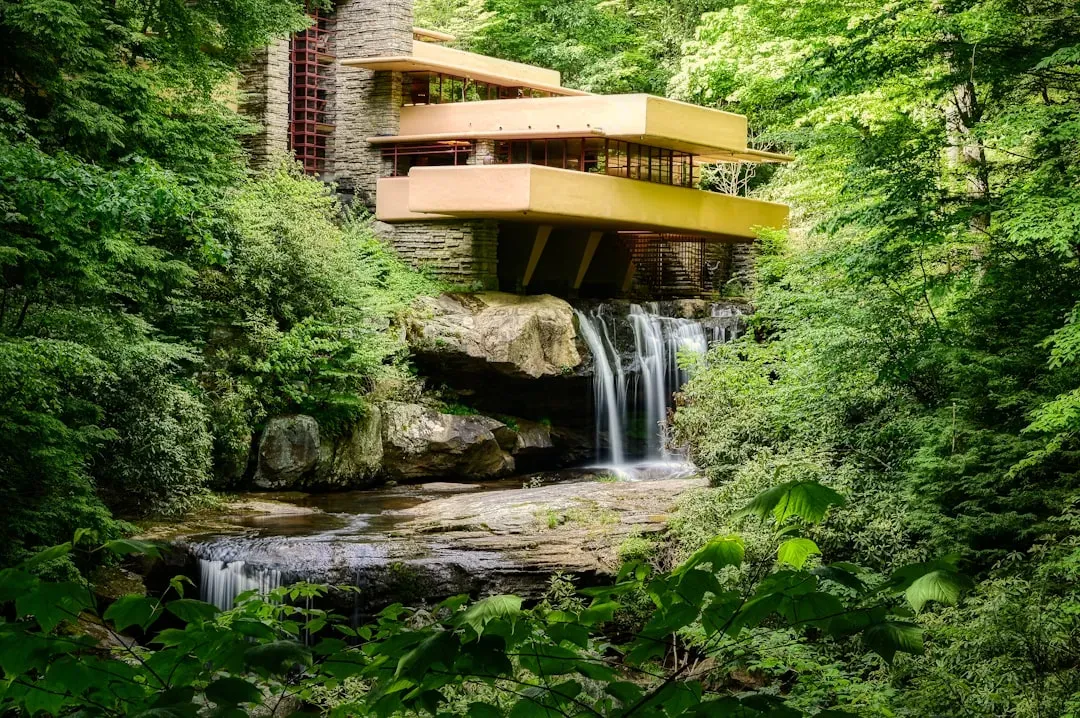
Fallingwater is Wright’s crowning achievement in organic architecture and the American Institute of Architects’ “best all-time work of .” Designed by American architect Frank Lloyd Wright for the Kaufmann family in 1935 and completed in 1937, the house’s daring construction over a waterfall was instrumental in reviving Wright’s architecture career and became one of the most famous 20th-century buildings.
Using a cantilever structure, Wright’s creation descends in layers like the waterfall that graces the site, taking the concept of integrating a home into its landscape to its ultimate extreme. The house would change our perception of how a home could be integrated with its environment. On July 10, 2019, UNESCO inscribed Fallingwater and seven other Frank Lloyd Wright-designed buildings to the World Heritage List, a recognition that confirmed what architects had known for decades: this was not merely a great house, but a turning point in how humanity thinks about built space.
The Gamble House, Pasadena, California (1908): The Craftsman Ideal Made Real
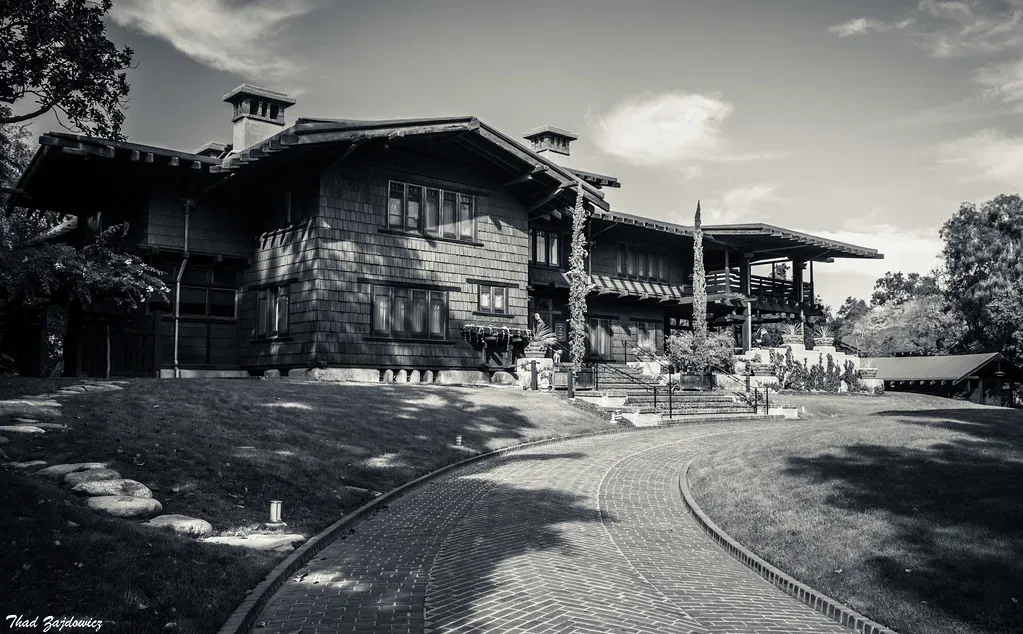
The Gamble House, built in 1908 in Pasadena, California, is one of the finest examples of American Arts and Crafts architecture. Designed by Charles and Henry Greene for David and Mary Gamble of the Procter and Gamble Company, the house blends natural materials, intricate craftsmanship, and harmonious design inspired by Japanese aesthetics.
Completed in 1908, the Gamble House helped define the American Craftsman style. Built with exposed beams, handcrafted woodwork, low-pitched roofs, and deep porches, it rejected the overly ornate Victorian homes that came before it. The exterior features broad overhanging eaves, exposed joinery, and beautifully crafted wooden details, while the interior showcases custom-built teak, mahogany, and oak furniture, leaded art glass windows, and exquisite hand-rubbed wood finishes. Every detail was carefully designed, from the built-in cabinetry and fireplaces to the stained glass and handcrafted light fixtures, making the home both functional and artistic.
Langston Terrace Dwellings, Washington D.C. (1938): Reimagining Public Housing
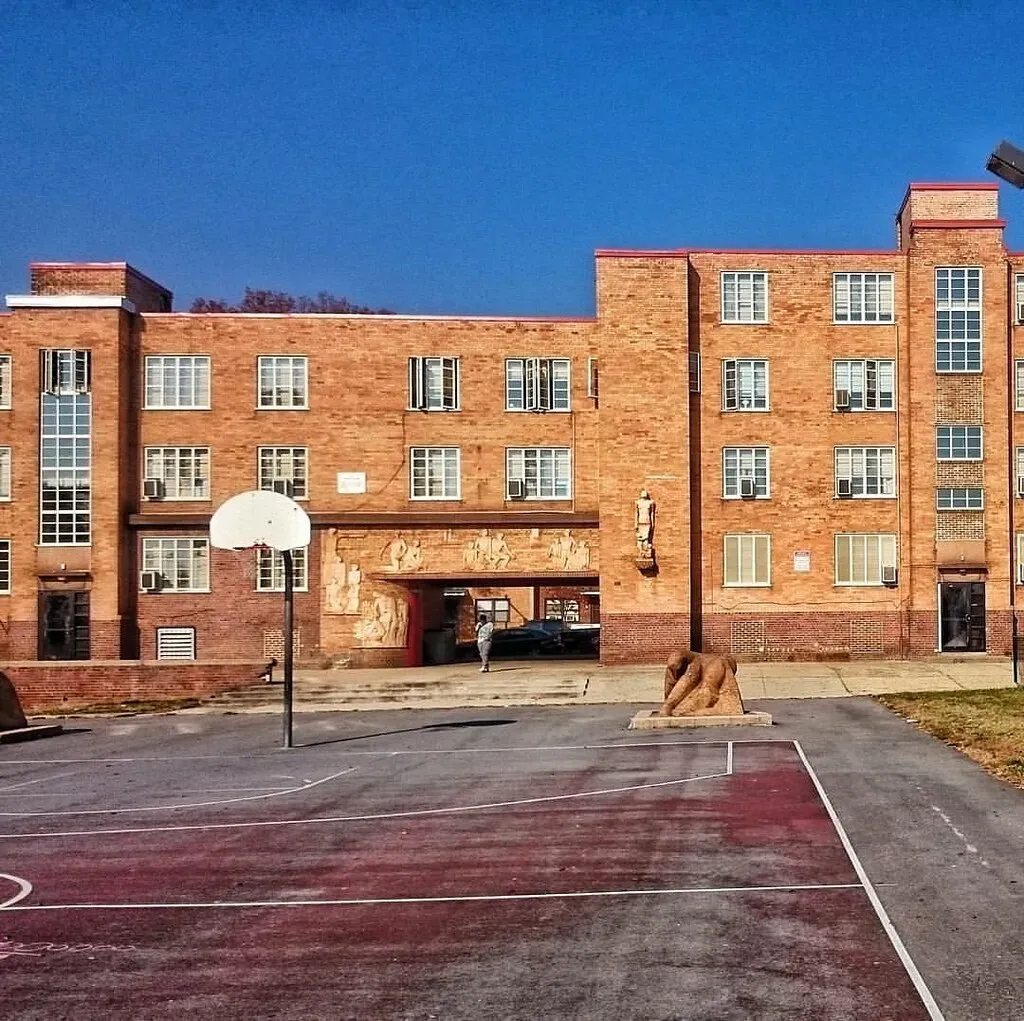
A bold rethinking of “public housing,” Langston Terrace offered residents, primarily African Americans who had fled the South during the Great Migration, stylish homes and a ticket out of the tenements. Built by African American architect Hilyard Robinson, who believed strongly in the power of architecture to transform lives, the modernist Langston Terrace featured open green spaces, courtyards, and play areas.
What made Langston Terrace so radical was the premise behind it: that people without financial power deserved dignified, thoughtfully designed spaces just as much as wealthy clients did. Instead of boxed-in rooms, the complex used open layouts, movable partitions, and natural light, concepts that later became staples of modern American homes. Today’s open-concept living spaces owe a lot to experiments like this. Robinson’s work shifted the conversation about who architecture was actually for.
The Eames House, Pacific Palisades, California (1949): The Beauty of Prefabrication
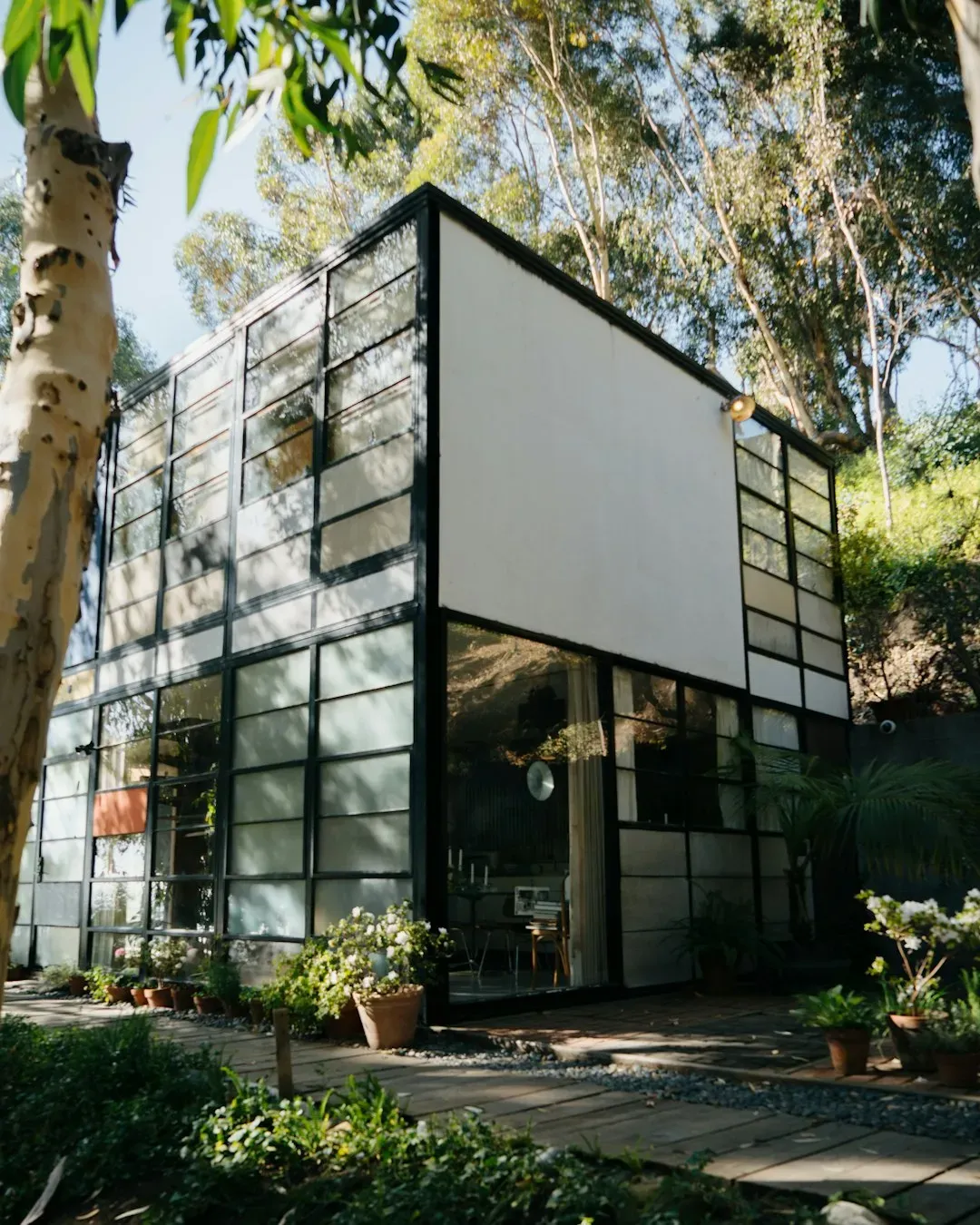
In 1945, the publisher of Arts and Architecture Magazine challenged a handful of architects to design modern, affordable housing that could be easily replicated. Among those to answer the challenge was the husband-and-wife team of well-known furniture designers Charles and Ray Eames. Their response, Case Study House No. 8, became one of the most photographed homes of the 20th century.
Despite being created from a wide variety of prefabricated materials, the Eames House showed that a factory-made home could still have style and personality. The couple assembled the structure largely from standard industrial components available in manufacturer catalogs, proving that budget constraints and aesthetic ambition were not mutually exclusive. Their approach quietly reframed what mass production could mean for residential architecture across the country.
The Glass House, New Canaan, Connecticut (1949): Total Transparency
Located in New Canaan, Connecticut, the Glass House, designed by Philip Johnson, is a prime example of modernist architecture. Philip Johnson, a key figure in 20th-century architecture, embarked on the design of the Glass House at a time when he was transitioning from his role as a curator at the Museum of Modern Art to practicing architecture. The house was his first commissioned project and served as his residence for 58 years.
The house, which ushered the International Style into residential , is iconic because of its innovative use of materials and its seamless integration into the landscape. One of the most recognizable residences in the United States, the Glass House is an icon of midcentury modernism. Its openness was revolutionary and spurred generations of material use in unconventional applications. The idea that a home’s walls could simply disappear, replaced entirely by glass and the surrounding landscape, was a provocation that the industry spent the next several decades working through.
The Ennis House, Los Angeles, California (1924): Concrete as Canvas
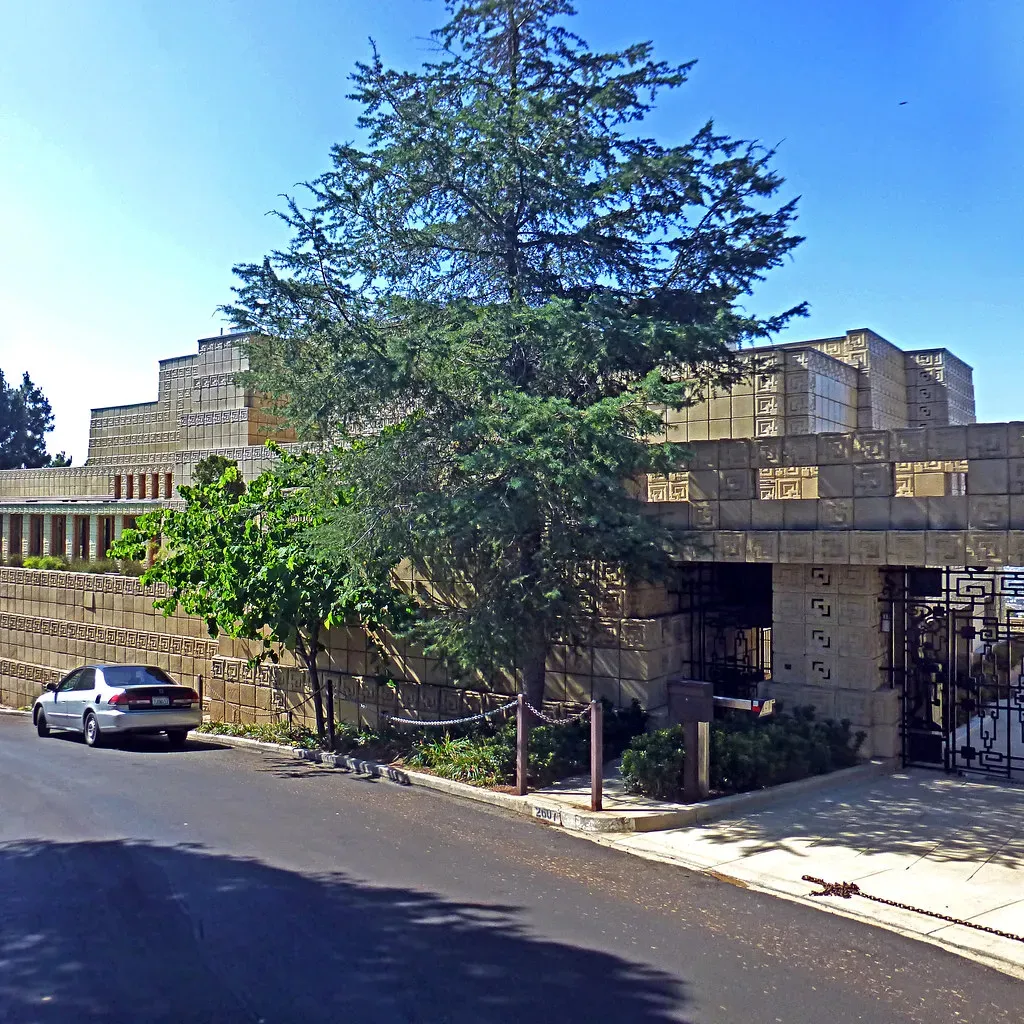
Built in 1924, the Ennis House introduced Wright’s experimental “textile block” system, concrete blocks with intricate geometric patterns stacked like masonry fabric. The design blended modern construction with ancient Mayan-inspired forms, creating something entirely new for American homes. It influenced later modular construction, decorative concrete design, and modernist experimentation across Southern California.
The Ennis House asked a question that still feels relevant: what happens when a structural material also becomes the primary decorative language of a building? Wright’s answer was something that looked almost archaeological, as if the house had been excavated rather than constructed. The unique structure became a favorite filming location, cementing its place in architectural pop culture, but its deeper legacy lives in how it normalized the idea that concrete, that blunt and utilitarian material, could carry genuine aesthetic ambition in an American home.
Each of these eight homes changed something specific: a material, a spatial idea, a social assumption, or the simple question of where a building belongs on its site. Taken together, they form something close to a map of how American domestic architecture evolved, not through theory but through the act of actually building something and then living with the consequences.