
There is a particular kind of relief that comes from walking into a room where everything has its place. It is not about perfection or showroom staging. It is something quieter, more physical, and increasingly backed by research that goes well beyond simple tidiness preferences.
Scientists who study homes, stress hormones, and attention have spent the last decade and a half trying to explain why disorder unsettles us and order calms us. The findings point to something deeper than aesthetics, touching on how the brain processes information and how the body regulates stress.
The cortisol connection researchers keep finding

One of the most cited pieces of evidence comes from a UCLA study that asked dual income couples to give video tours of their homes while describing what they saw. The researchers tracked mood and measured cortisol, a stress hormone, over several days, and the pattern was clear: wives who described their homes with more stressful language, words like cluttered, messy or unfinished, showed less healthy daily cortisol patterns and worse mood.
The effect was not evenly distributed. For husbands, the link between home conditions and stress was much weaker. Later research from the same dataset reinforced this, with one study of 60 dual-income couples finding women living in cluttered and stressful homes had higher levels of cortisol and heightened depression symptoms.
Why the brain treats mess as a threat
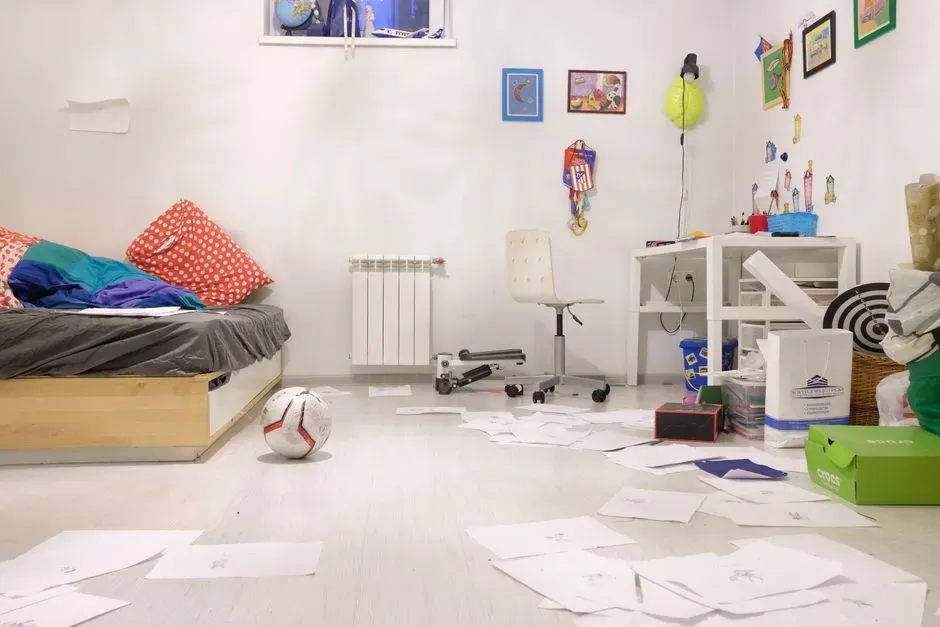
Clutter does not just look bad, it appears to compete for the brain’s limited attention. Neuroscience research summarized by outlets covering the topic explains that your body doesn’t distinguish between the stress of a cluttered room and other environmental threats, it simply responds to the signal that something in your surroundings demands vigilance.
This is not a fleeting reaction either. Living or working in persistent clutter for weeks or months creates cumulative neurological effects, with sustained cortisol elevation from ongoing low-grade stress impacting the hippocampus, the brain region responsible for memory consolidation and emotional regulation, which helps explain why people in chronically cluttered environments often report feeling foggy, forgetful, or emotionally reactive. A tidy space, by contrast, gives the nervous system less to react to.
Visual noise and the limits of attention

A frequently referenced 2011 study from the Princeton Neuroscience Institute looked at how the brain handles competing visual stimuli. As summarized by health researchers, having too many items in our field of vision distracts the brain’s processing capacity, and clearing away clutter allows the brain to focus on items and tasks one at a time.
This idea shows up again in more recent commentary on the topic. Researchers have found that being surrounded by clutter makes people more distractible and less able to focus as it overloads our senses with competing stimuli, and this visual noise makes it difficult for our brains to relax, contributing to anxiety and a lack of mental clarity. A clean room, in this sense, is simply a room with fewer demands on your eyes and mind at once.
Clutter as a stand in for unfinished business

Mess rarely exists in isolation. It tends to represent something left undone, and that unfinished quality carries its own psychological weight. As one recent piece on the mental load behind household mess put it, clutter is rarely just clutter, it often stands for unfinished tasks, and unfinished tasks usually have an owner in the family system, even if nobody ever said it out loud.
That ownership question matters because it ties disorder to responsibility. In most American homes, women carry the bulk of what’s called mental load, which is any work that requires the brain, noticing, remembering, delegating, researching, and when a woman sees clutter, she doesn’t only notice the mess but begins actively processing what she is going to need to do next and how she will do it. A clean home, then, can feel like one less item on an already crowded mental list.
Why women often feel it more than men

The gender gap in clutter related stress shows up consistently across studies, and it is not simply a matter of taste. Research suggests the detrimental effects of mess and clutter may be more pronounced in women than in men, with one study of 60 dual-income couples finding women living in cluttered and stressful homes had higher cortisol and depression symptoms that remained consistent even when marital satisfaction and personality traits were factored in.
The men in the same research told a different story entirely. The men in this study seemed largely unaffected by the state of their home environments, and researchers theorized that women may feel a greater responsibility for maintaining the home. A peaceful home, for many women, is inseparable from a sense that the invisible labor behind it is under control.
A sense of control in a chaotic world

Beyond hormones and attention circuits, there is a simpler emotional mechanism at play. Order in the home offers a rare thing in daily life, a space you can actually manage from start to finish. One health resource summarizing the therapeutic side of cleaning noted that small successes of decluttering will strengthen your organization skills and build your confidence and self-efficacy.
That sense of agency helps explain why cleaning often feels good even when it is tiring. This leads to a psychological benefit sometimes called delegated completion, where you achieve a profound sense of calm and control that comes from a completed task, a fresh, clean home, without having to deplete your own finite energy reserves to get there. Control over a small, contained space can feel disproportionately reassuring when the rest of life feels unpredictable.
Familiarity, routine, and emotional containers

Psychologists who work directly with clients on this subject often describe the home as more than four walls. Danielle Roeske, a psychologist quoted in coverage of the topic, has explained that our outer environments can act as a container for our emotional and psychic states.
Consistency plays a role here too, separate from cleanliness alone. Human beings prefer similar routines that offer stability, even amid otherwise chaotic circumstances, and keeping household items in order can provide that familiarity, though order doesn’t necessarily mean everything is lined up perfectly or color coordinated, since another person’s sense of order may differ from yours. A peaceful home is often less about spotlessness and more about predictability.
The line between healthy order and harmful perfectionism

It is worth noting that the research does not argue for flawless, sterile living spaces. A completely rigid pursuit of tidiness carries its own risks, and some disorder is simply part of a full life. While constant disorder is unproductive, perfectionism in cleanliness can also be harmful, linking to anxiety and poor mental health.
Occasional mess is not automatically damaging either. Not all clutter is bad, occasional disorder can spark creativity, but understanding its impact can lead to better mental well-being. The goal is a livable baseline of order, not a museum quality display that becomes its own source of pressure.
Practical strategies that actually reduce stress

Recent psychological writing on the subject has moved past simply telling people to declutter and toward more sustainable frameworks. One approach described in 2024 research on clutter and mental load breaks the work into distinct habits. Shedding involves intentionally minimizing possessions, including the emotional work required to let things go, while preventing focuses on systems, giving items clear homes so that decisions about where things go become automatic rather than mentally taxing, starting with listing common types of clutter and designing dedicated spots for each.
The third piece of the framework may be the most important for long term peace of mind. Adapting asks families to accept that some clutter is inevitable in busy seasons of life and to concentrate on emotional regulation and co-regulation with partners, keeping stress and cortisol lower by adjusting expectations rather than striving for a perpetually picture-perfect home. That mindset shift, more than any specific cleaning method, seems to be what turns a tidy house into a genuinely restful one.