
Dim the lights and let candles do the talking

Harsh overhead lighting is one of the fastest ways to kill a relaxed mood. Switching to lamps, string lights, or dimmable bulbs instantly softens a room and signals to your brain that the day is winding down. Warmer light temperatures, generally below 3000 kelvin, tend to feel more soothing than the cooler, bluish tones common in office or kitchen lighting.
Candles add another layer, both visually and in terms of scent. Unscented soy or beeswax candles are a gentler option for anyone sensitive to fragrance, while scented varieties like vanilla, cedar, or lavender can help set a calming tone. Grouping a few candles at different heights on a shelf or coffee table creates a flickering, layered glow that no single light bulb can replicate.
Choose comfort over style when it comes to seating

A cozy evening depends heavily on where your body actually rests. Oversized blankets, floor cushions, and a well-worn armchair often do more for comfort than a perfectly styled but stiff sofa. If your main seating isn’t particularly soft, layering it with a chunky knit throw or a few extra pillows can make a noticeable difference in how inviting it feels.
Temperature matters here too. Being even slightly too cold can undercut relaxation, so keeping a blanket within reach or adjusting the thermostat a degree or two warmer in the evening can help the body settle. Wool or fleece-lined slippers are a small addition that keeps feet warm without needing to crank up the heat for the whole house.
Bring in scent through candles, diffusers, or simmering pots

Smell is closely tied to mood and memory, which is part of why scent-based rituals show up so often in relaxation routines. Essential oil diffusers with lavender, chamomile, or sandalwood are popular choices for evening use, since these scents are commonly associated with calm rather than energy. A simmer pot on the stove, made with cinnamon sticks, orange peel, or cloves in water, is a low-cost alternative that fills a home with warmth without any synthetic fragrance.
It’s worth being mindful of how strong a scent becomes in a closed room, since overpowering fragrance can have the opposite effect and feel more irritating than soothing. Rotating scents by season, lighter florals in warmer months and richer, spiced notes in colder ones, keeps the experience from becoming stale. A little restraint usually goes further than saturating every room with fragrance at once.
Put together a slow, screen-light evening playlist

Music sets pace in a way that’s easy to underestimate. Fast, lyric-heavy tracks tend to keep the mind alert, while instrumental, low-tempo playlists, think acoustic, lo-fi, or ambient piano, encourage the nervous system to slow down. Streaming services now offer entire categories built around this exact mood, often labeled as chill, wind-down, or evening focus playlists.
Volume matters as much as song choice. Keeping music at a background level rather than a foreground one allows conversation, reading, or simply thinking to happen without competition. For those who prefer complete quiet, ambient sound apps that mimic rain, crackling fire, or soft wind can serve a similar purpose without adding musical structure at all.
Make tea, cocoa, or a warm drink part of the ritual

There’s a reason warm drinks show up so consistently in cozy evening routines, they combine physical warmth with a built-in pause. Herbal teas like chamomile, peppermint, or valerian root are frequently chosen for evening use because they don’t contain caffeine, unlike black or green tea. Hot cocoa, warm milk with honey, or spiced cider are equally common alternatives for those who want something a bit more indulgent.
The ritual itself matters almost as much as the drink. Taking the time to heat water slowly, choose a favorite mug, and sit without multitasking turns a simple beverage into a small act of self-care. Even five uninterrupted minutes with a warm cup can act as a clear signal that the day’s obligations are done.
Curate a stack of books, shows, or games without pressure

A cozy evening often includes some form of entertainment, but the key is choosing things that feel restorative rather than demanding. A novel picked purely for enjoyment, a rewatch of a familiar comfort show, or a slow board game with a partner or roommate all fit the bill better than content chosen out of obligation or algorithm-driven urgency. The goal is engagement without pressure, nothing that requires intense focus or leaves you more wound up than before.
Physical books and printed puzzles have seen a modest resurgence in recent years, partly because they don’t come with the blue light or notification pull of a screen. Puzzle sales and adult coloring books, both of which spiked during the pandemic, have remained popular as low-stimulation evening activities. Rotating between a few options, rather than committing to just one, keeps the evening flexible depending on energy levels.
Limit screens and notifications earlier than usual
Blue light exposure from phones, tablets, and laptops can interfere with the body’s natural melatonin production, according to sleep research from institutions like Harvard Medical School. Setting phones to a do-not-disturb mode an hour or two before bed, or using built-in night-shift filters, is a simple way to reduce that interference. Even without the biological argument, stepping away from constant notifications tends to make an evening feel noticeably calmer.
This doesn’t have to mean total digital abstinence. Watching a show or listening to a podcast is fine, the difference is intention. Passive, uninterrupted screen time in the evening feels different from checking emails, scrolling social media, or reacting to work messages, which keep the mind in a more alert, reactive state.
Tidy just enough to remove visual clutter

A cluttered room can quietly undermine an otherwise cozy setup, since visual chaos tends to keep the mind slightly on edge even if it isn’t consciously registered. This doesn’t require a deep clean, just clearing surfaces like coffee tables, countertops, and the floor near your main seating area. A few minutes of tidying before settling in often pays off more than any candle or blanket alone.
Organizing psychologists have long pointed out that visible mess is linked to elevated stress markers, even in casual home settings. Keeping a small basket or tray nearby for stray items, remotes, chargers, mail, means less gets left scattered across a room in the first place. The goal isn’t a spotless house, just enough order that the space feels settled rather than chaotic.
Add natural textures like wood, wool, and plants

Natural materials tend to read as warmer and more grounding than synthetic ones, which is part of why wood furniture, wool throws, and woven baskets show up so often in cozy home aesthetics. This connects to a broader concept called biophilic design, which suggests that incorporating natural elements into indoor spaces can support relaxation and reduce stress. Even a small collection of houseplants, like a pothos or snake plant, adds a living element that softens a room without much upkeep.
Texture variety matters as much as material choice. Mixing a smooth wood side table with a chunky knit blanket and a soft rug underfoot gives a room visual and tactile depth. This layering effect is a big part of why some spaces feel instantly inviting while others, despite similar furniture, feel flat or sterile.
Set a loose routine instead of a rigid schedule
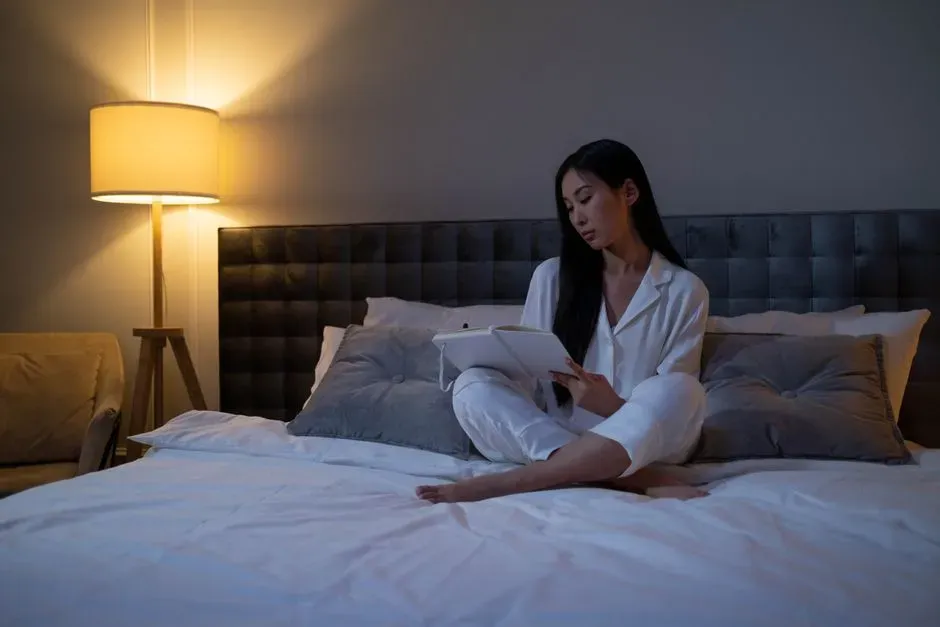
Cozy evenings tend to work best as a loose sequence rather than a strict checklist. Lighting a candle, making tea, then settling into a book might sound appealing on paper, but forcing every step in exact order can turn a relaxing routine into another task to complete. Letting the evening breathe a little, skipping a step some nights or lingering longer on others, keeps the ritual from becoming just another obligation.
Consistency still helps, just not in a rigid sense. Doing some version of the same wind-down routine most evenings reinforces a mental association between those actions and rest, similar to how a consistent bedtime routine supports better sleep. The specifics can shift with the season or mood, as long as the underlying rhythm, slow down, disconnect, get comfortable, stays roughly the same.