
There’s a particular kind of stillness you feel stepping into a well-preserved midcentury home in Los Angeles. The rooms don’t announce themselves. The light does that for them, sliding in at an angle through broad glass panels while exposed beams trace clean lines across the ceiling. A 1962 L.A. home built at the peak of the movement carries all of that quietly.
Much of California’s architectural legacy is rooted in the midcentury and, in particular, the city’s wealth of modernist houses. Southern California has always been among the most architecturally progressive parts of the USA, especially since the 1920s, when Los Angeles experienced a golden era with the birth of the movie and entertainment industry. By 1962, that spirit had matured into something genuinely livable, less experimental than the decade before and more resolved in every detail.
The City That Shaped a Style
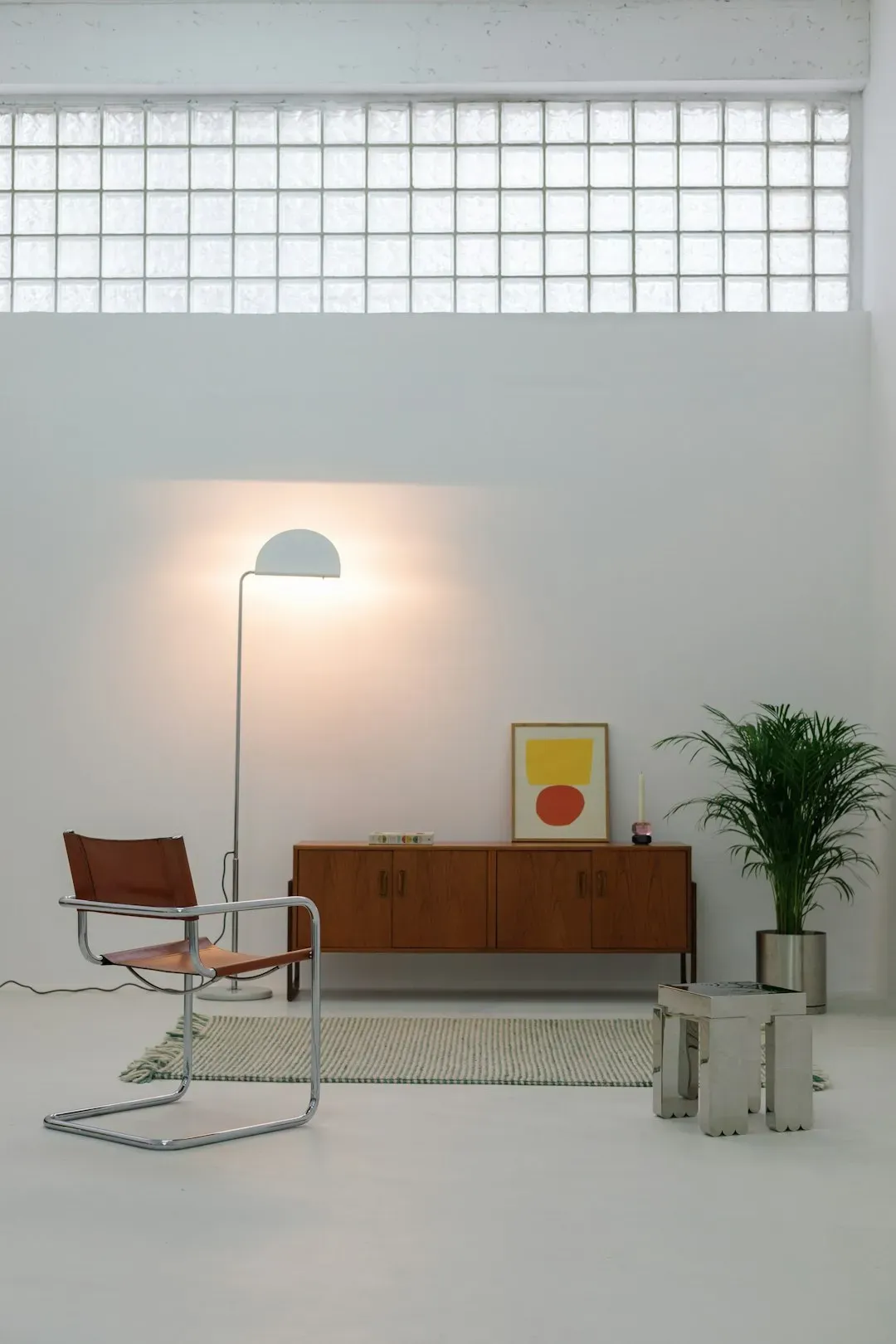
It was in Los Angeles where, from the 1920s to the 1960s, designers and architects transformed the ideas of the European avant-garde to fit the climate and environment of the American West. The result was something distinct from its European roots, warmer in palette and far more interested in the outdoors as a genuine extension of domestic life.
The mid-century modern movement in the U.S. was an American reflection of the International and Bauhaus movements, including the works of Gropius, Florence Knoll, Le Corbusier, and Ludwig Mies van der Rohe. Although the American component was slightly more organic in form and less formal than the International Style, it is more firmly related to it than any other. Los Angeles, with its abundance of sun and hillside terrain, gave those ideas room to breathe.
Post-and-Beam Construction as a Design Philosophy
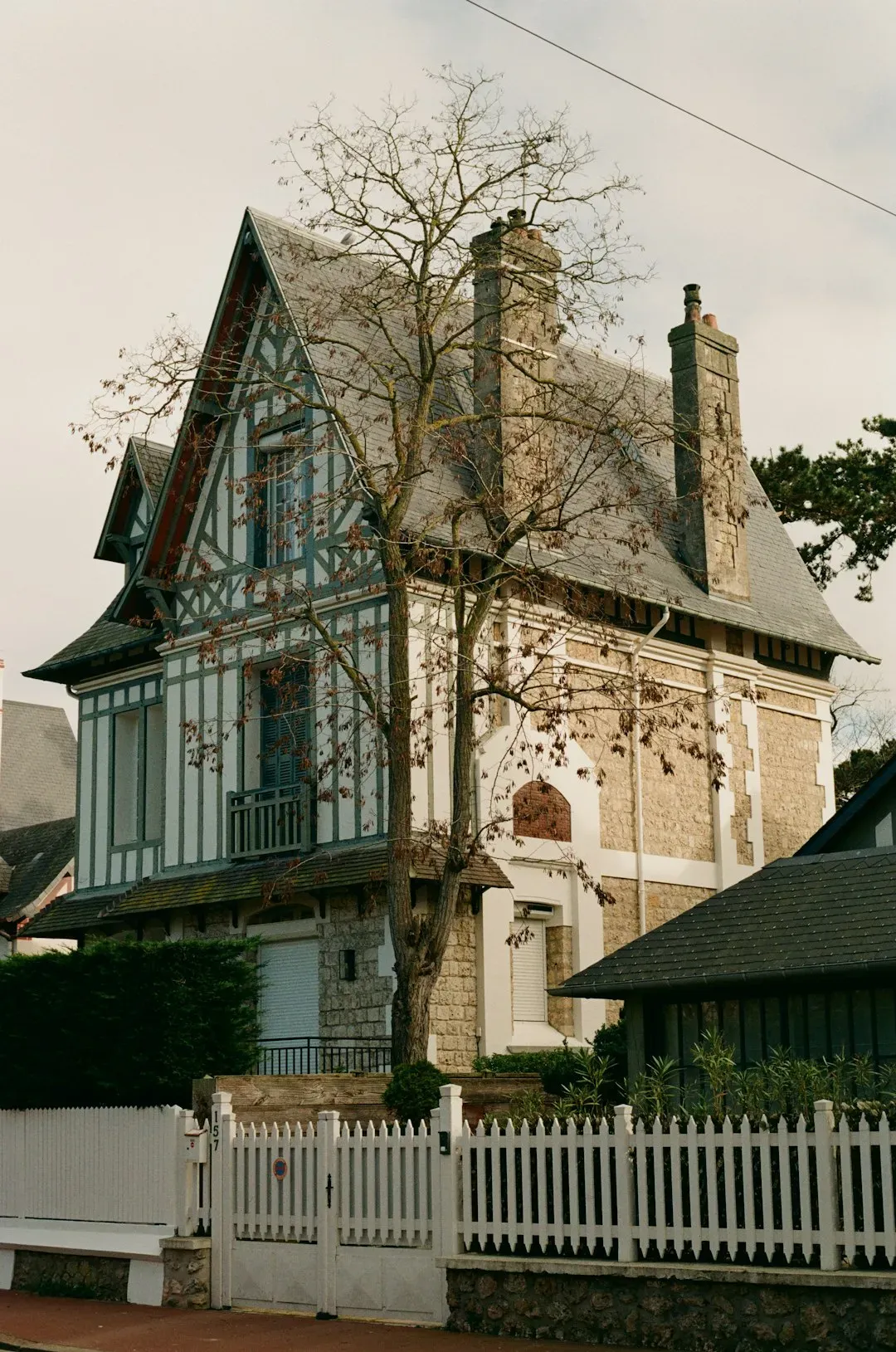
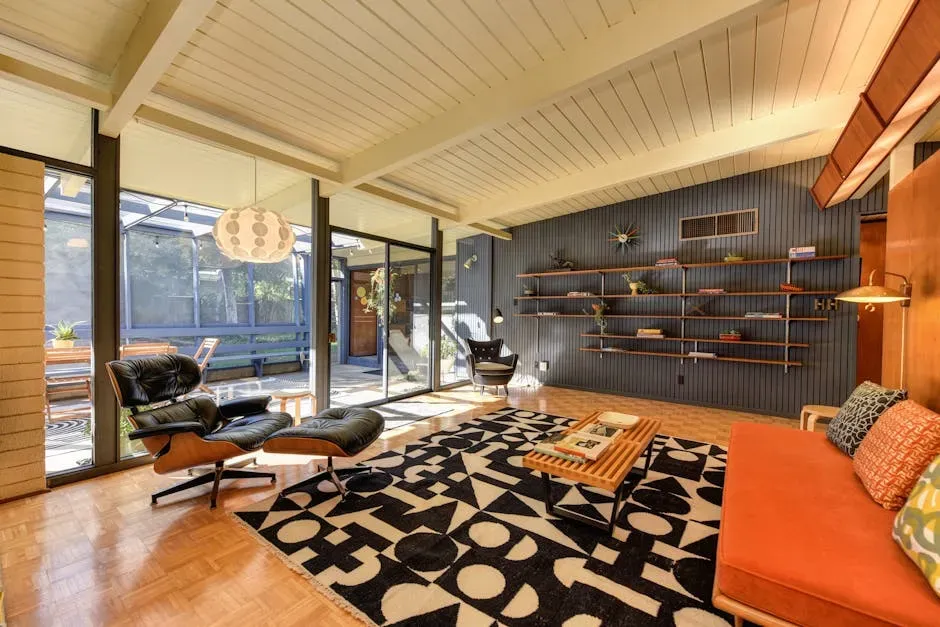
Many mid-century houses utilized then-groundbreaking post and beam architectural design that eliminated bulky support walls in favor of walls seemingly made of glass. For a 1962 L.A. home, that structural approach was not a novelty. It was simply the expected way to build. The frame itself became the architecture.
On the exterior, a midcentury modern home is normally very wide, with partial brick or glass walls, low footprints with floor-to-ceiling windows, and flat rooflines, while exposed ceilings and beams, open floor plans, ergonomically designed furniture, and short staircases connecting rooms throughout the house often define the home’s interior. The 1962 vintage adds a particular refinement to all of this. Earlier Case Study experiments had worked out the kinks. By this point, the formula was quietly confident.
Floor-to-Ceiling Glass and the California Light
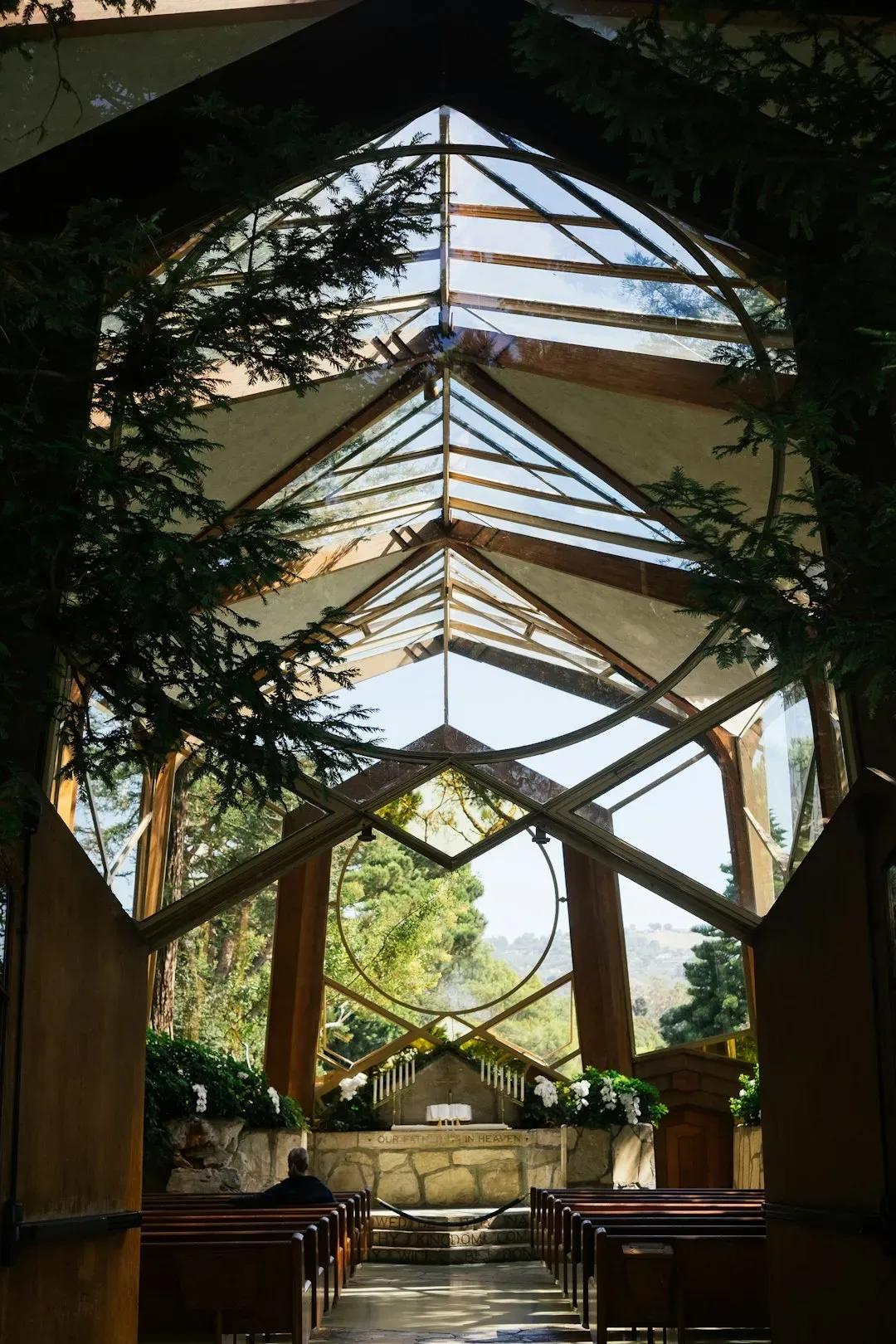
Like many of Frank Lloyd Wright’s designs, mid-century architecture was frequently employed in residential structures with the goal of bringing modernism into American homes. This style emphasized creating structures with ample windows and open floor plans, with the intention of opening up interior spaces and bringing the outdoors in. In an L.A. context, that philosophy found its most natural expression under the California sun.
One of the particular highlights of midcentury post-and-beam design is the walls of glass. Set within the post-and-beam structure, with the frames painted black, they allow for a really pleasing interaction between the indoor and outdoor spaces. This interaction is also enhanced by the roof, which overhangs extensively in various parts of the exterior, including a delightful, decked garden space. The 1962 homes got this balance right in a way that still feels considered today.
The Open Plan Living Area
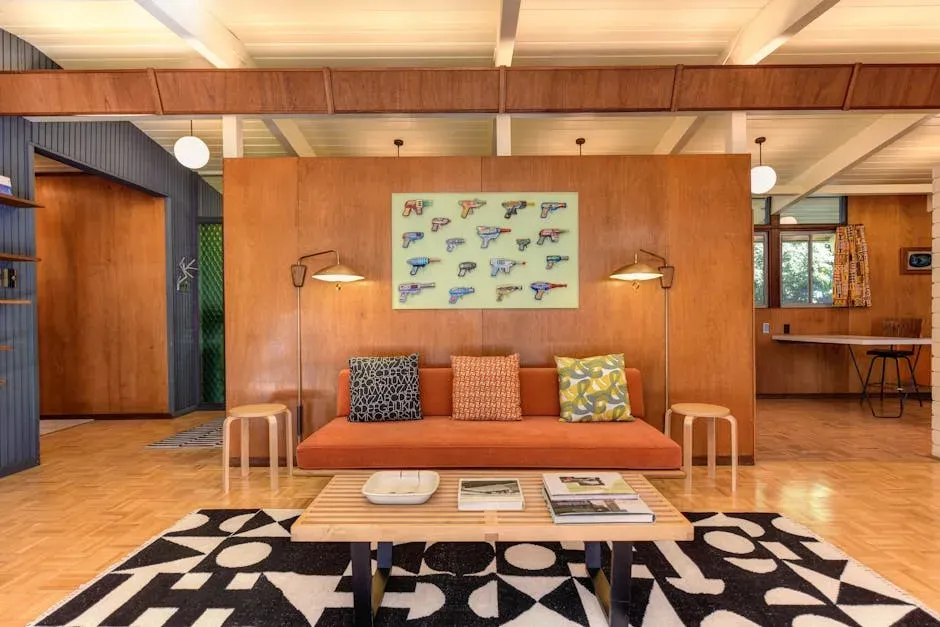
Horizontal lines, open floor plans, site choice, steel frames, modular components, and public and private spaces contribute to the zen living experience these homes offer. You can have one big event or several small gatherings simultaneously and everyone will still feel connected. There are no walls separating the kitchen from the living or dining room, so the flow of conversation is smooth and natural.
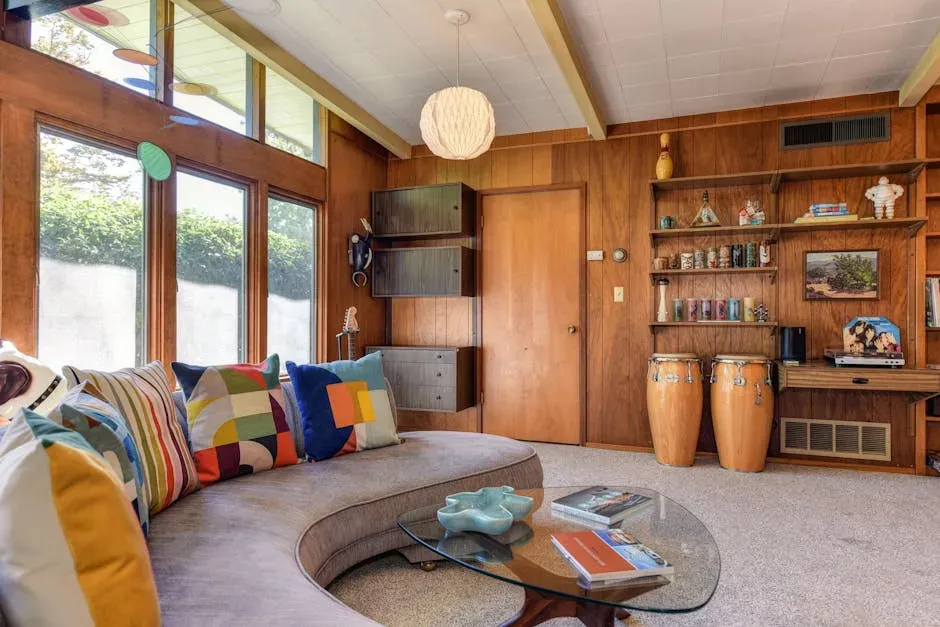
Unique architectural details, wood-clad walls, and expansive interiors filled with sleek, well-designed objects, art, and classic furniture add to the mid-century modern home’s style and vibe. Often, expansive fireplaces in the living area help create a focal point and a warm, inviting atmosphere, perfect for entertaining or relaxing at home. In a 1962 original, those fireplaces and redwood walls survive largely intact, which is what makes an unaltered example so rare.
The Kitchen: Unchanged and Unapologetic
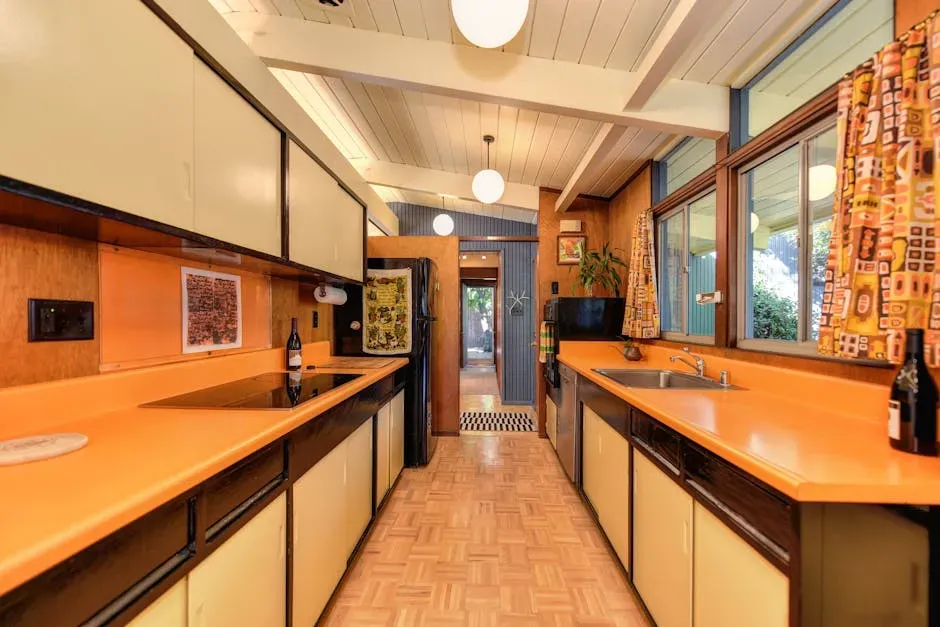
The kitchen, plywood-clad and largely unchanged since the 1960s, retains its original logic and layout, underscoring how carefully these houses have been preserved when their owners respected the architecture. It’s worth pausing on that word: logic. Midcentury kitchens weren’t designed for drama. They were designed to function as part of a continuous social space.
The stained post-and-beam structure was untouched in many original 1960s midcentury homes, preserving its natural beauty. Original cabinetry, tile, and hardware survive in the best-preserved examples, and those details are increasingly difficult to replicate authentically. Finding all of those elements still in place in a 1962 L.A. home is genuinely uncommon in 2026.
Indoor-Outdoor Flow and the Garden Connection
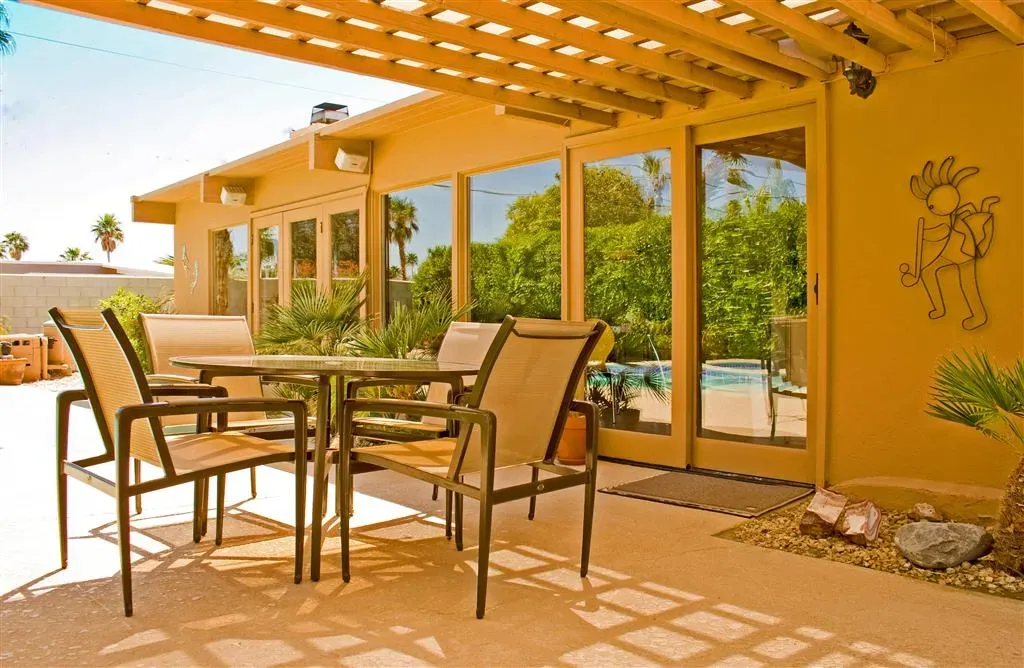
Midcentury post-and-beam residences were built with an emphasis on organic materials, indoor-outdoor flow, and exceptional views. For a 1962 property in Los Angeles, that typically meant a rear terrace accessible through sliding glass doors, with the boundary between the interior and the garden made deliberately ambiguous.
Hillside midcentury L.A. homes feature airy, glass-lined designs that frame sweeping canyon and city-light views while embracing seamless indoor-outdoor living. Post-and-beam construction by the early 1960s had become the defining standard for this style in Hollywood Hills and similar neighborhoods. Even homes on flatter lots carried the same impulse, opening onto patios and gardens as naturally as a door opens onto a porch.
The Architects Who Defined the Moment
The ambitious Case Study House program, commissioned by Arts and Architecture magazine, invited established architects including Richard Neutra, Pierre Koenig, A. Quincy Jones, J.R. Davidson, Thornton M. Abell, Charles Eames, Eero Saarinen, Buff and Hensman, Craig Ellwood, Rodney Walker, and Raphael Soriano to submit prototypes. Their influence spread well beyond the Case Study program itself.
With residences by the likes of Richard Neutra, Raphael Soriano, Craig Ellwood, Pierre Koenig, and A. Quincy Jones dotting the landscape, Los Angeles is no doubt a globally known destination for masterful midcentury homes. By 1962, these architects had trained a generation of practitioners who carried the same values into more modest commissions across the city’s hillside neighborhoods.
Preservation Challenges for an Aging Icon
Midcentury architecture preservationists normally combating destruction or alteration at the hand of developers, speculators, and homebuyers now face something much larger and more amorphous. The January 2025 Eaton and Palisades fires brought that reality home with terrible clarity. Of the 28 Gregory Ain designed Park Planned Homes in Altadena alone, only seven of those properties survived the Eaton Fire.
A known structural vulnerability in older midcentury houses is that they are single glazed. The heat from a fire can easily crack this glass and enter the house. For owners of 1962 originals, this is a practical consideration, not just a historical one. Careful stewardship now means understanding the building’s limits alongside its beauty.
Why 1962 Marks a Particular High Point
The Case Study House program, which ran until 1966, brought more than 350,000 visitors to the homes. These iconic modernist architects defined the mid-century modern movement in Los Angeles, and these homes continue to influence contemporary architecture today. By 1962, the program’s ideas had filtered into mainstream residential design across the city, making that year something of a quiet peak.
Midcentury modern homes are designed to be really functional for a modern lifestyle. They are still very compatible with the way we live now, unlike, say, Victorian homes, that have servant halls and root storage cellars. That compatibility is precisely why a genuine 1962 example remains so compelling. It doesn’t ask you to adapt to it. It adapts to you, just as it was designed to do.
What “Authentic” Really Means in 2026
With residences by the likes of Richard Neutra, Raphael Soriano, Craig Ellwood, Pierre Koenig, and A. Quincy Jones dotting the landscape, Los Angeles is no doubt a globally known destination for masterful midcentury homes. Today’s stewards of these treasured houses have risen to the challenge of preserving and renovating them for modern living. The best of them work to preserve what’s original rather than replacing it with new materials that merely gesture at the era.
While many midcentury communities have never been formally landmarked, they are widely recognized by historians and preservationists as important examples of midcentury residential planning, offering a remarkably intact snapshot of the architectural optimism that defined California suburbia in the 1960s. A 1962 L.A. home that still holds its original bones, its original light, and its original relationship to the landscape is not just a place to live. It’s a record of an idea that was genuinely worth keeping.