
Your driveway might feel like your own personal territory – and honestly, in many ways, it is. You own it, you pay taxes on it, and you maintain it. So it can feel genuinely surprising when an official letter lands in your mailbox telling you that what you’ve got sitting out front is actually illegal.
The truth is, across the US, UK, and beyond, there are dozens of regulations, zoning codes, and HOA bylaws governing what can and cannot live on your driveway. Most homeowners have no idea. Let’s get into it.
1. Inoperable or Junk Vehicles

This is probably the most commonly violated driveway rule in residential neighborhoods, and it’s enforced more strictly than most people realize. In many unincorporated communities, cars and trucks that are dismantled, wrecked, or otherwise not in running condition must be stored inside a completely enclosed and permitted building such as a garage or a shed.
If you have cars or trucks that are not in running condition and they are stored in the street in front of your house, in your driveway, front, side or back yards, you may be required to remove them from your property. That project car you’ve been “getting around to fixing” for two years? It may already be a violation.
The presence of an excessive number of junk vehicles can threaten the character and safety of neighborhoods. They may cause deterioration partly due to visual blight, which affects property values. Junked vehicles can create attractive nuisances for children and provide harborages for rodents, insects, and other pests.
In Seattle, the first-time penalty for violating the junk storage ordinance is $150, and the penalty for additional violations is $500. Fines are higher in certain zones. Other cities can go much further.
2. Recreational Vehicles and Motorhomes
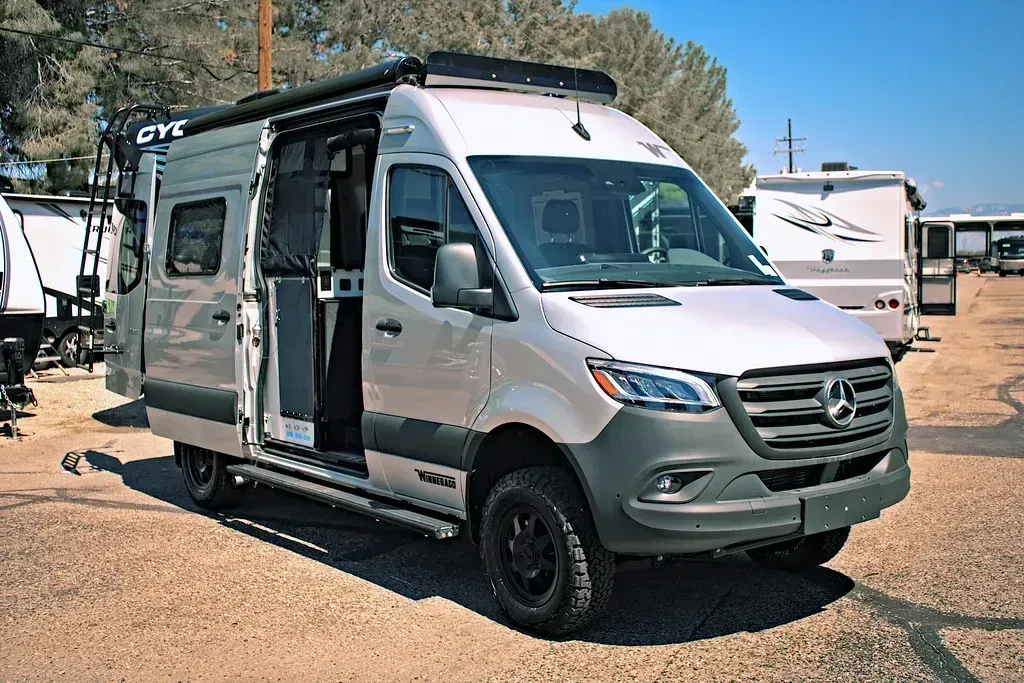
Here’s the thing – a lot of people park their RV in the driveway between camping trips and think nothing of it. But depending on where you live, that motorhome could already be breaking local zoning rules. In Los Angeles County, recreational vehicles such as motorhomes, travel trailers, and boats are not allowed to be stored, parked, or maintained in the driveway, except under specific conditions within community standards districts.
In many areas, RV owners can park their vehicle in the driveway for a short time – such as when preparing for a trip – but longer-term storage may be restricted. Some cities require permits for parking more than a few days, while others prohibit overnight RV parking entirely unless it is done in a licensed storage facility or designated RV park.
Local zoning laws, homeowners association rules, and city or county ordinances all influence whether you can legally park or live in your RV at home. Understanding these rules is essential for staying compliant and avoiding costly fines or neighbor disputes. I know it sounds harsh, but the rules can be surprisingly firm even for short stays.
3. Boats and Boat Trailers
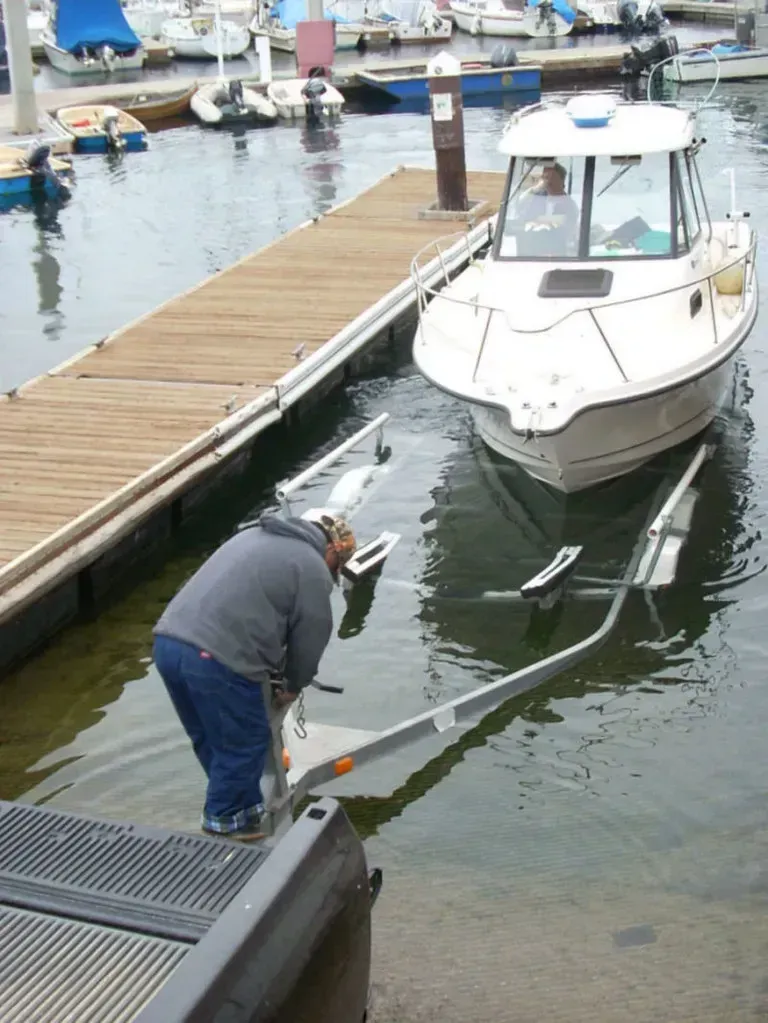
Boat owners are often among the most surprised when code enforcement shows up. Most cities require boats to be stored off-street and to be sight-screened. Some allow boats to be temporarily parked on-street for short durations. “Temporary” is often far shorter than most people assume.
In some municipalities, up to three boats or watercraft trailers can be parked or stored on the property – but they must be parked or stored within a garage or carport, or parked or stored behind the front line of the house. They must also be parked within a garage or carport or on a driveway.
Unregistered and unlicensed boats, trailers, camper shells, recreational vehicles, jet skis, and similar devices may be parked in any side or rear yard outside of any required setback area. However, any such device or part so parked must be screened from any public right-of-way. Basically, out of sight is usually far safer legally.
4. Scrap Metal, Car Parts, and Auto Supplies

It’s incredibly common to drive through a residential street and spot loose car parts, old rims, or a scattered engine block sitting on a front driveway. Looks harmless, right? Tires, auto parts and supplies, and cleaning supplies stored outdoors in a residential driveway are commonly cited as a zoning violation by LA County Planning.
In Seattle, you are not allowed to store junk outdoors on your property or adjacent right-of-way such as an alley or planting strip. Junk can be used materials, scrap metal or car parts, construction debris, furniture, trash, or inoperable vehicles.
Storing items classified as junk and salvage material on commercial, residential and agricultural properties is generally not allowed. “Junk and salvage” is broadly defined in many zoning codes to include dismantled machinery, equipment, and parts, as well as scrap metals, furniture, and similar materials. The scope of what counts as “junk” is often wider than homeowners expect.
5. Old Tires

A stack of old tires sitting alongside your garage might seem totally harmless. But those rubber circles carry serious legal and environmental baggage. Nearly 300 million worn-out tires are discarded each year in the United States. They are banned from landfills in most states because they have a tendency to rise to the surface of the landfill, and their shape invites a watery home for disease-carrying insects. They also pose a fire risk.
Beyond the landfill angle, storing tires openly on residential property is flagged as a visual nuisance and public health concern in multiple municipal codes. Items that might look like useful salvage materials to one person – including tires, lumber, and scrap metal – must still be stored away from public view and removed from the property if deemed a violation.
If you’ve got spare tires sitting outside, the good news is the solution is simple. Tire retailers typically accept your old car tires when you purchase new ones. Some states also have special tire recycling facilities that will take your tires, and they can be recycled into products like rubber-modified asphalt, automotive products, and landscaping mulch.
6. Trash Bins Left Out Permanently
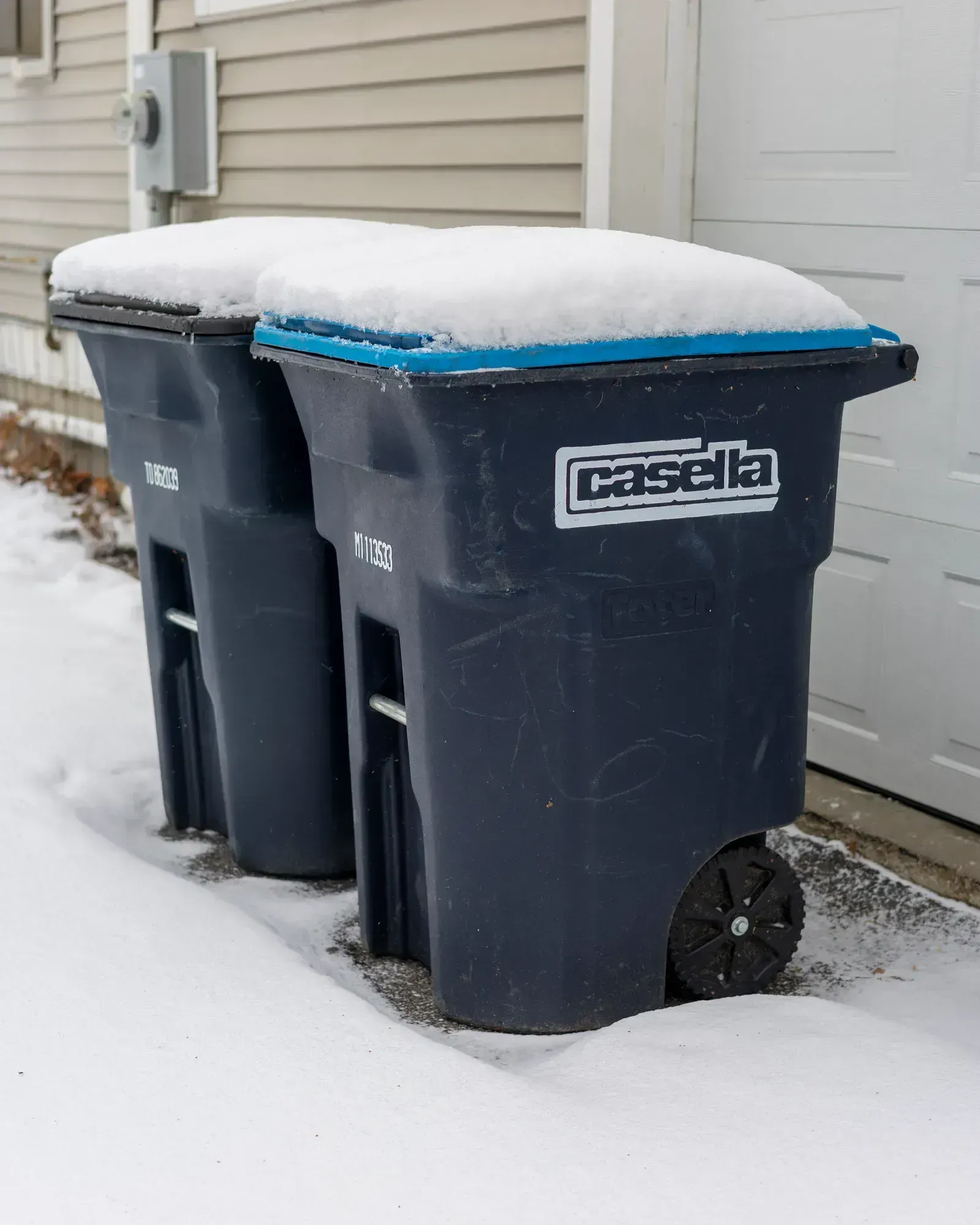
You have likely seen it on nearly every street – a wheelie bin that has lived on the driveway for what appears to be several months. It happens quietly, and most homeowners genuinely don’t think twice. But many local authorities and HOAs have strict rules about when bins can be visible. HOA rules typically include setting specific days or times for putting out trash and recycling, requiring bins to be stored out of sight like behind a fence or in the garage, and mandating secure lids to deter animals.
Violating these rules could result in fines, so it is a good idea to familiarize yourself with your community’s covenants. In New York City, the rules are even tighter. As of November 12, 2024, single- and two-family homes and properties with up to nine residential units must use bins with secure lids for trash set out.
If you set your waste out incorrectly, at the wrong time, or on the wrong day, you may be fined. Something as routine as a bin left on the driveway a day too long can genuinely trigger a penalty – even without a formal complaint from a neighbor.
7. Construction Materials and Debris

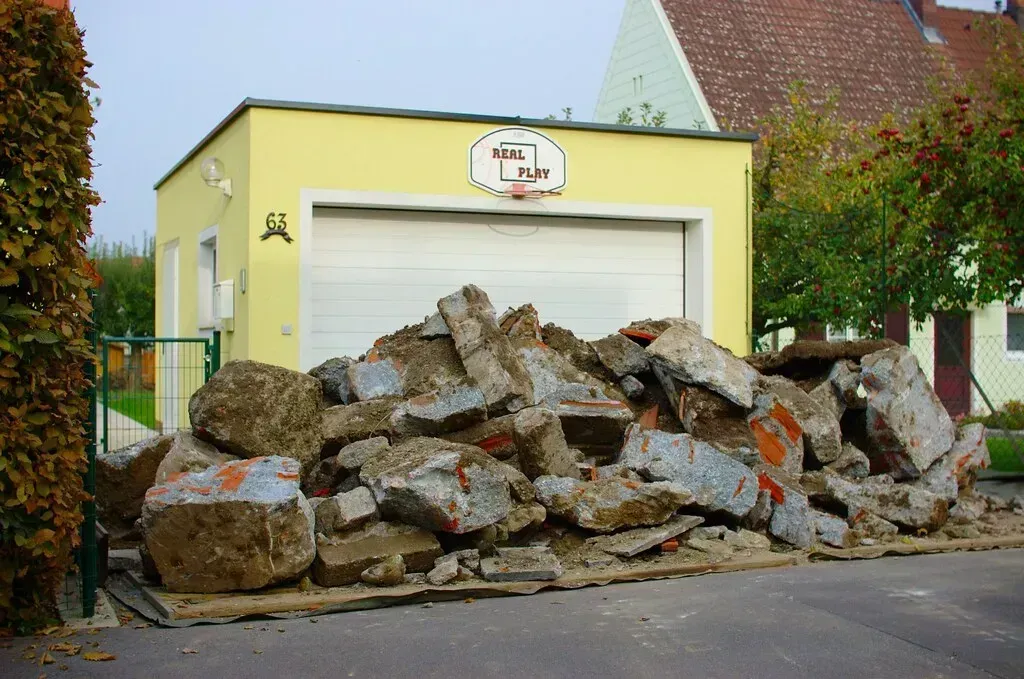
A home renovation is exciting. A driveway piled with timber, bags of cement, and leftover roofing tiles is not always legal. Many municipalities treat lingering construction debris as a nuisance. Under some municipal definitions, “junk” includes old appliances, boxes, old wood, building materials, and similar articles – all of which are often left out during home improvement projects.
Examples of common violations cited by local code enforcement include broken machinery, discarded materials maintained on residential property, multiple bags of debris, and broken furniture left in yards or on driveway areas. Honestly, it’s the kind of thing that starts as a “temporary” pile and turns into a years-long situation.
UK driveway regulations focus mainly on drainage, highway access, and planning compliance. Getting these wrong can lead to enforcement notices, fines, or being required to remove the work. The rules apply not just to what’s on the driveway, but what’s being stored there too.
8. Caravans and Camper Trailers
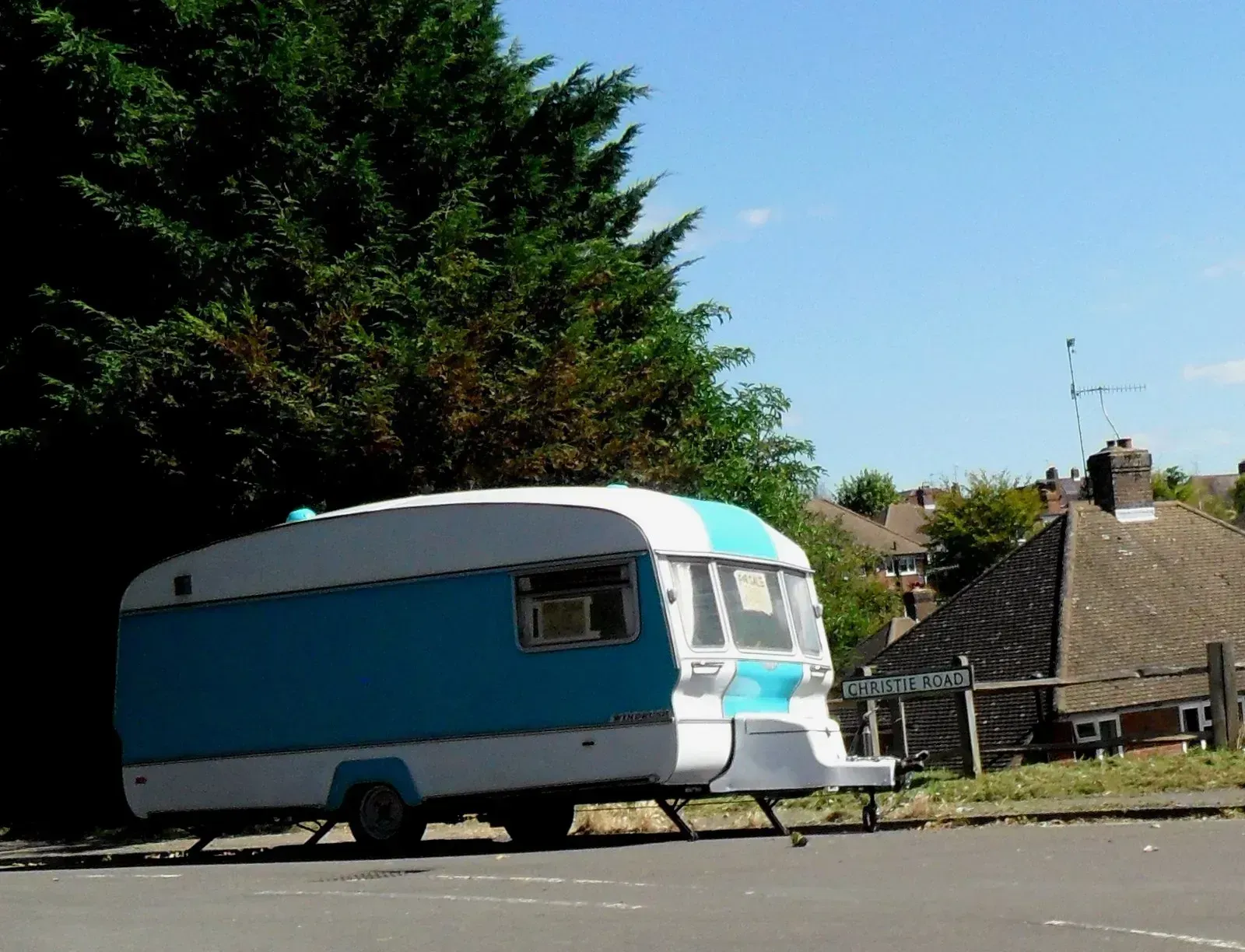
Caravans and camper trailers are a special kind of grey area. They are not exactly vehicles, not exactly structures, and yet they manage to violate both categories depending on the local code. Unless otherwise prohibited, campers and recreational vehicles must be stored off of the street in an area designated on your property for vehicle storage, which may include your driveway or yard areas. However, that permitted area is more restricted than most people assume.
In Riverside County, California, campers and recreational vehicles may be temporarily stored in the street in front of your house for a maximum of four days per month and no longer than 48 hours at a time. That is a surprisingly narrow window for something you might just be parking between weekend trips.
Most local governments make a clear distinction between temporary stays and permanent residency. Temporary use, such as guests staying for a few days or homeowners using an RV during home renovations, is generally tolerated and often allowed under local ordinances – sometimes with time limits of up to 30 days per year. Beyond that, you may need a permit or face enforcement action.
9. Commercial Vehicles
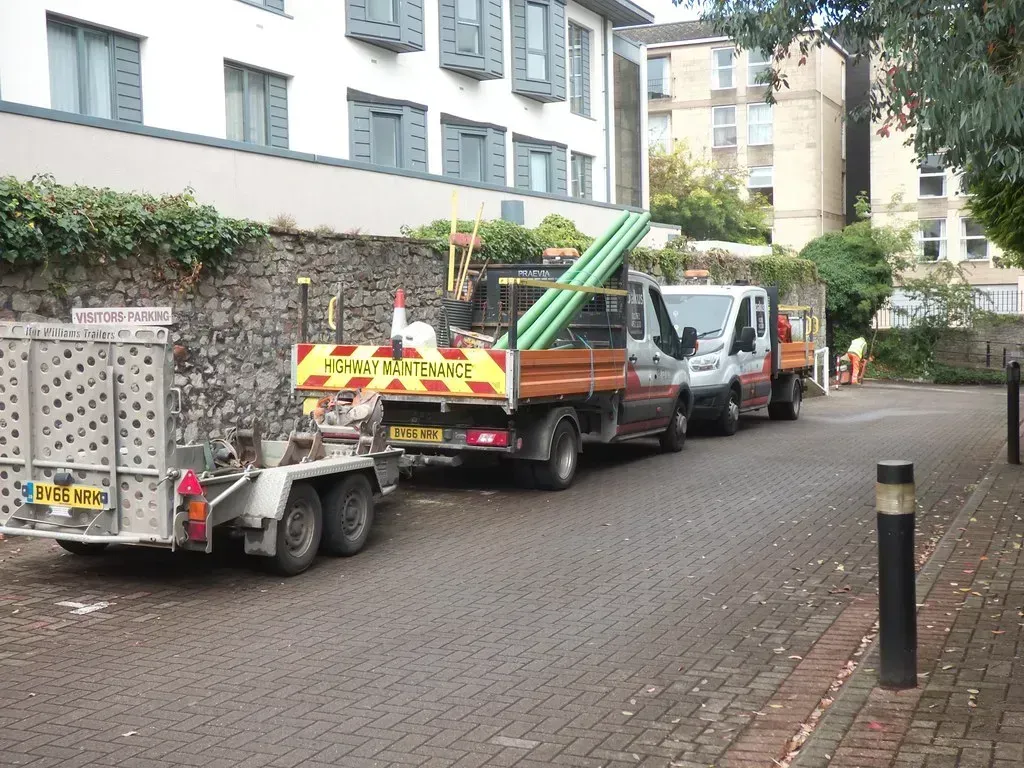
Tradespeople, delivery drivers, and small business owners often use their personal driveway for their work vehicles. It seems logical – it’s your property, after all. But many residential zones specifically prohibit commercial vehicles from being parked or stored there. Most communities prohibit overnight parking of larger trucks in residential areas, with a few providing for off-street parking in residential zones by permit only.
In some municipalities, only one commercial vehicle can be parked or stored on a residential property. A commercial vehicle is typically defined as one used for a business or commercial purpose, rated at a certain weight class, or bearing any sign or marking that advertises or identifies any business or commercial venture.
Some municipal codes regulate the parking of commercial trucks, trailers, or any type of construction equipment in residential zones, except when loading or unloading or in connection with approved construction projects during daylight hours. Even a sign-written van left overnight can trigger a complaint and a fine in stricter neighborhoods.
10. Garage-Blocking Items and Clutter
This one catches people off guard. It turns out that blocking your own garage with items – whether that’s furniture, boxes, or garden equipment – can actually be a code violation. Required covered off-street parking such as a garage or carport must be maintained accessible for the parking of vehicles. The garage entrance and driveway cannot have items blocking vehicle access to the driveway and garage or carport interior.
When various items maintained in front of the garage door prevent access to required covered parking spaces, this constitutes a zoning violation. Similarly, if items and a canopy are placed in front of the garage door, access to required covered parking spaces is blocked and the situation is treated as illegal. That sounds extreme, but it is routinely cited in urban code enforcement actions.
Think of it like this: if the law requires a certain number of off-street parking spaces on your property, and you can no longer physically use them, you’ve effectively reduced your compliant parking provision. It is, practically speaking, a lot like illegally converting a bedroom into an unusable storage room – only more visible to the neighbors.
11. Hazardous Fluids and Oil Leaks

This tag does not indicate the copyright status of the attached work. A normal copyright tag is still required. See Commons:Licensing.
العربية ∙ বাংলা ∙
Bahaso Jambi ∙
Deutsch ∙ Deutsch (Sie-Form) ∙ English ∙ español ∙ euskara ∙ فارسی ∙ français ∙ italiano ∙ 日本語 ∙ 한국어 ∙ македонски ∙ മലയാളം ∙ Plattdüütsch ∙ Nederlands ∙ polski ∙ پښتو ∙ português ∙ русский ∙ slovenščina ∙ svenska ∙ Türkçe ∙ українська ∙ 简体中文 ∙ 繁體中文 ∙ +/−, Public domain, https://commons.wikimedia.org/w/index.php?curid=8223816)
An oil-leaking vehicle sitting on a residential driveway is more than just an eyesore. It can actively violate environmental regulations and drainage codes. Non-porous driveway materials such as asphalt or tarmac can absorb pollutants from your car, which can run into water systems during a heavy downpour. The lack of a drainage system can harm the environment, affecting rivers and lakes.
Non-porous surfaces can increase the risk of surface water runoff, which could cause issues for others in the area. When motor oil or fuel runoff travels from your driveway into public drainage systems, it stops being a private matter pretty quickly. Environmental agencies have the authority to pursue the property owner.
Legal responsibility does not end after installation or after parking. If your driveway becomes damaged and begins draining incorrectly, you may still be liable. Regular maintenance and professional repairs can help maintain compliance and protect your investment. It’s hard to say for sure how often this is actively enforced, but the legal exposure is real and genuinely serious.
12. Large Shipping Containers and Storage Units

Portable storage containers and large metal shipping crates have grown hugely popular as a home storage solution. But many residential zones classify them as semi-permanent structures, which puts them into planning and zoning territory. Vacant land must be clear of any storage materials, vehicles, and structures until a primary use has been established with approvals from the relevant planning authority or county agency. Even non-vacant properties face restrictions.
Each jurisdiction may have specific rules and guidelines that homeowners must adhere to regarding driveway construction, dimensions, and maintenance. A shipping container sitting in your driveway can technically fall under multiple regulation categories simultaneously – building code, zoning, HOA bylaws, and even neighbor visibility rights.
UK driveway regulations focus on highway access and planning compliance, and getting these wrong can lead to enforcement notices, fines, or being required to remove the work. Across both the US and UK, the consistent message is the same: what sits on your driveway is not always purely your own business. When in doubt, always check with your local planning or code enforcement office before something becomes a problem.
—
It’s genuinely staggering how many everyday driveway items can turn into a legal headache. From a forgotten bin to a beloved project car, the rules are out there – they’re just rarely talked about until someone gets a fine. The smartest move is to check your local ordinances before parking, storing, or leaving anything outside for extended periods. So here is something worth sitting with: how many of these twelve items do you currently have on your driveway right now? Tell us in the comments.